From Dangerous Woman to Woman in Danger
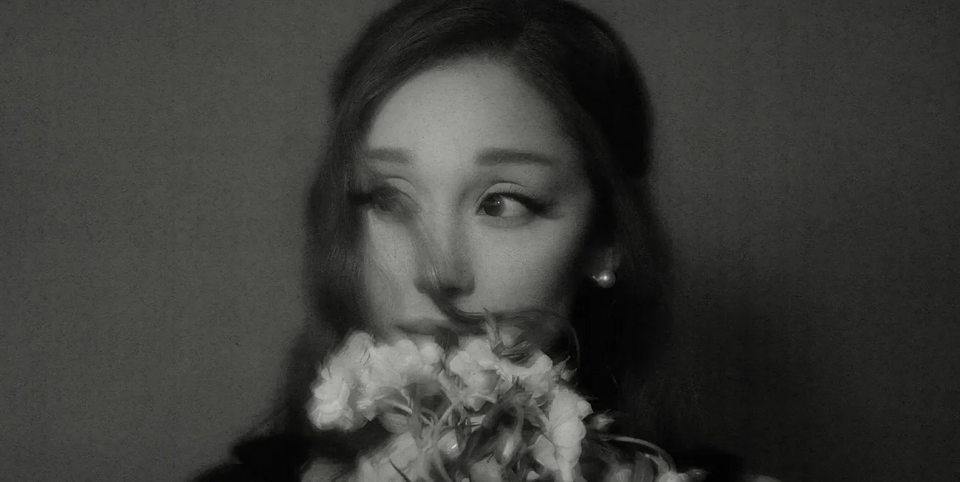
In Paulo Coelho’s The Alchemist, the theme of yearning seeps through every character in their respective ways. It was where I first learned that some people yearn for so long, they give up hope of their desired object ever arriving at all. I have come to empathize because that is how I felt awaiting Ariana Grande’s eighth studio album, petal (2026). As I do with all of her albums, truthfully. But arrive it did, once I finally stopped thinking about it. Happiness is a butterfly after all.
My initial sense of detachment to this work feels mirrored by the work itself. On petal, Grande has let go of any and all inhibitions. Long gone is her own yearning to fit a palatable image and sound. As she noted in her interview with Apple Music: “I wrote from a place that I don’t usually, which was like an unfiltered rage that I think we all feel sometimes.”
While I do agree that petal is pretty experimental, it still has Grande’s theatrical flair all over it. Doing away with niceties and edits for the public's sake, however, Grande delivers an unfiltered record that sets an entirely new tone for the artist and what we should expect from her, which is… unclear, deliberately so.
Looking back, Grande’s discography traces a tragic shift in how we consume pop stars. A performing artist has become a performance, a 24/7 spectacle to whom we demand intrusive access. This wasn’t always the case.
Grande’s early albums had clear themes or purposes that helped keep art and artist separate: Yours Truly (2013) essentially showed the world she has the singing chops, earning her comparisons to big-hitting vocalists like Mariah Carey. My Everything (2014) proved Grande can play with the big kids, featuring every chart-topping name at the time to create a rare compilation of EDM, RnB, and Pop ballads. Talk to her nice.
Once she established herself as a versatile, powerhouse pop vocalist, Grande took the world by storm on Dangerous Woman (2016). Nickelodeon days were over and Ari had arrived. Characterized by big RnB textures thanks to some of producer Max Martin’s greatest work, it had a grown sound. Grande crafted a vibe that went along with this album in a moody, sexy, sultry persona. Her first highly stylized “era,” DW was Grande’s first thematic album, but still not a personal one. She was still an artist, and she was still safe.
Until Sweetener (2018) and thank you, next (2019), where Ariana Grande became an actual person in the public eye and her albums started to read like transcripts from therapy sessions.
This great shift—caused undoubtedly by the Manchester Bombing, very public relationships, an engagement, and a breakup—was spearheaded by Grande’s management team, who nudged her into this vulnerable direction. Thus, Grande’s music transformed entirely from a persona into the personal. Very different from the mysterious, bass-booming ballads of a femme fatale, Grande was now name-dropping lovers, past and present, through velvety coos and cheeky one-liners, and even giving us a rundown of her innermost insecurities.
These two albums share themes centered around hope and introspection, as if a public service announcement, with the former being centered on Grande’s healing and the latter on her sense of resilience.
Musically, this era was brilliant in its own right. Breaking away from easy radio pop, Sweetener was the most experimental of Grande’s discography thus far. Half produced by Pharrell Williams, it leans toward the “avant-garde” with its unusual vocal structure and funky offbeats. With such a unique sound as a distraction, it was easy for Grande to get away with the intimacy of these tracks.
thank you, next found Grande on the opposite side of the spectrum sonically with her proper induction into the dark trap-pop category. Hard-hitting beats and ego-stroking affirmations galore. Some artists get big heads about them; Miss Grande gets a taller ponytail.
Grande has yet to shake off the shadow of these albums’ success, especially TUN. That lollipopping, big-boot-stepping peak has fans in a chokehold to this day, probably serving as the inspiration for “hate that i made you love me.” There’s something so cruel about your own success keeping you from evolving as a person, yuh.
In a larger lens, these records and their commercial success bound Grande to an unsustainable paradigm, as the public began to demand her personal trauma as a prerequisite for her art. She knows the cage in which she finds herself all too well, singing on petal’s titular single: “Tryna feel something real to cry again / They say the artist needs tears to write again.”
By the time Grande stepped into executive producing and vocal arranging on the long-awaited Positions (2021), her technical genius went unacknowledged next to her celebrity. She brilliantly mixed her version of trap-pop and RnB in a way we had never heard before, and yet, it is identifiably clean and crisp. Highly orchestral in sound, Grande layered her own voice, utilizing an aspirate singing technique (the wispy sounds we love) to create a vocal wall. She was basically a one-woman orchestra. Engineered completely on her own, her vocal layers blended in perfect harmony with the album’s plucked string arrangements. If ever there was a time to reintroduce herself, it was this.
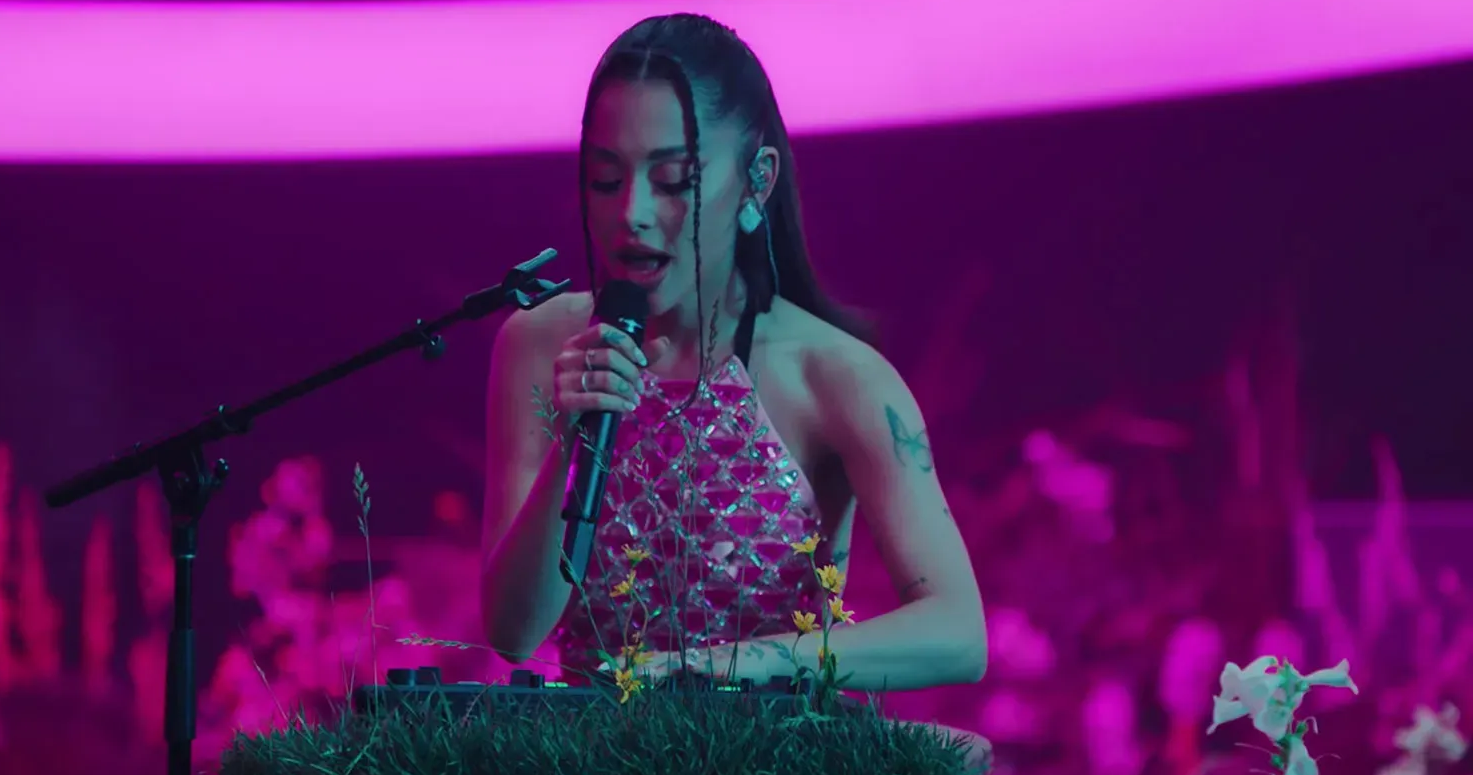
Of course, thematically, it was another album touching on topics of healing, trauma, falling in love, rinse and repeat. The public perception of the lyrics—and obsession with linking them to Grande’s personal life—greatly overshadowed the masterful work she did on the album. Surely the seeds of rage were planted by now as super-imposing songs became expected of the singer, while her evolution in craft was ignored.
It didn’t take much for listeners to realize that eternal sunshine (2024) and its deluxe expansion, brighter days ahead (2025), were an obvious and albeit brilliant, cinematic workaround to Grande’s post-divorce NDA. The context of her personal life drove so much of this album’s buzz that Grande’s continual writing, producing, and arranging still didn’t get the attention it deserved in comparison.
The highlight of this tracklist, and Grande’s career, is surely her multi-octave harmonies, emphasis on live guitar strings, and house-influenced rhythms. Standing out artistically, eternal sunshine gave us ElectroPop and brighter days gave us back the trap-RnB we love from Grande. Co-producing again with tried-and-true Martin and his protégé, Ilya Salmanzadeh (ILYA), she was still the pilot behind the concept and vocal direction.
But wait, there’s more! Grande added a new hat to her trade by co-writing and directing the brighter days ahead short film, incorporating her knack for musical theatre with the cinematic theme of the sister albums. With each new endeavor, Grande gets grander.
And so we arrive, finally, to petal. This album has no true precedent, and at this point, it's hard to imagine a succession—but let us not get ahead of ourselves.
I was excited to see that this album was created entirely in tandem between the poet and her trusty producer, ILYA (with pop-ins from Martin on the lead singles, of course). Some of the best pop albums have gone this way, so I knew it was going to be good. (See also Lana Del Rey & Jack Antonoff on Norman F*****king Rockwell!, and Taylor Swift & Aaron Dessner on the better half of The Tortured Poets Department).
Every Grande album is characterized by a distinct texture on top of an RnB base, but this is a whole new turn for her. Never has she kept her tracks this minimal. Encased in a hazy, mid- and down-tempo Electro-RnB landscape, Grande dips into Alt-Pop, UK Garage, and even a little Indie Rock territory. Most shockingly, even more so than some of the lyrics, Grande does away with her signature octave changes and long, smooth belts. Instead, this album is anchored in her lower-chest register, and the vocal layers are whispers rather than whistles.
The entire vocal design is controlled in a way Grande hasn’t done before. Singing with restraint and a staccato technique, we are no longer feeling her emotions, but rather hearing her detachment from them. petal has the somber, dark, haunting mood of someone who is done. She’s not exactly saying, “here, damn,” but she is saying, “you wanted me? Here I am.”
Sonically, it is reminiscent of Positions with its raw instrumentals, quirky tempos, and multilayered vocals, but lyrically, it reminds us she still has a Dangerous Woman in her. Some tracks have so much rhythmic dissonance that it shouldn’t work, but it does, it does. Ultimately, petal is like the jaded, self-assured older sister. If DW was the eager, bright-eyed freshman looking to impress and garner male validation, petal is the senior who got it and realized it wasn’t worth it. Her hair has come down, and she’s more confident than ever.
Lyrically, Grande drops the metaphors and disguises. petal is her most personal album ever, yet she does not share a single factoid about herself. This proves the crucial point pop culture needs to learn: we don’t need to know who she is dating or the status of her mental health journey to feel lyrical intimacy. Unlike “We Can’t Be Friends (Wait For Your Love)”—which fans speculate to be less of a love song and actually an address to the general public in disguise—petal is entirely more direct. Opening the record with what sounds like a sonic boom and the lines, “Society desperate for remedy. Empathy, fix this reality,” is a pretty strong message and confrontation with the listener.
On the album’s centerpiece and most haunting track, “freak,” Grande invents a muse—a singular, gross, and intrusive representation of the entitled public. She declares to the freak that she will no longer feed their fantasies. The track dissolves through the outro into an uneasy battle with the spotlight: “I don’t wanna go, let me go… Please, let me go now,” bleeding directly into "warning signs (interlude).” These tracks right here told me that Grande’s recently announced step back from public-facing work was a long-planned farewell.
Listening to petal, I found myself returning to critic David Orr’s Beautiful & Pointless: A Guide to Modern Poetry. Orr argues that modern readers often mistake the “lyric I” in poetry to be representative of the author’s literal identity, prioritizing perceived personal intimacy over technical skill:
“What we view as ‘personal’ is often in tension with what we view as ‘skillful’ or ‘accomplished.’ That's because the personal typically involves what appears to be either an actual loss of control on the poet’s part or a teetering-on-the-brink, and both scenarios run counter to our usual ideas about skill.”
For the last half century, he posits that poetry—and I would add music—has shifted toward a “confessional” style, but the reception of it has steered in a different direction. Now, as we take in poetry, we think we’re looking through a window into someone’s life, when it is actually an intentionally crafted window. We relate ourselves to this seemingly personal poem rather than experiencing it as a performance.
This phenomenon has poisoned pop music. Grande is not the first singer to lament undue public intrusion and scrutiny. From an 18-year-old Britney Spears’ tears on “Lucky” to BTS addressing the claustrophobia of their image on “NORMAL,” the warning signs have always been there, if we bothered to listen.
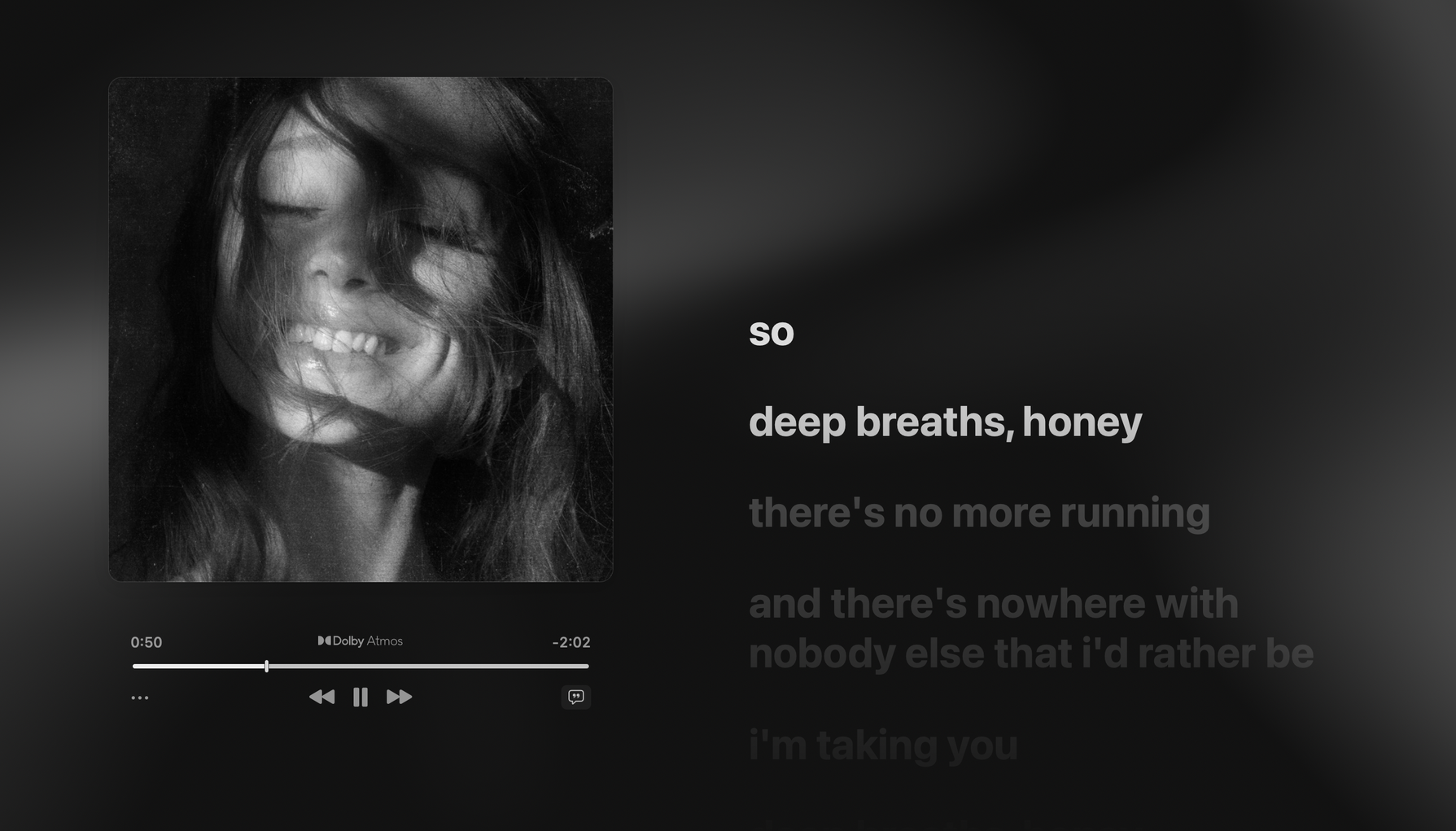
And yet, Grande sings, “this is not a cry for help,” and I so want to believe her, but I believe her more when she sings, “i wish someone could hear me.”
Unfortunately, for her to know true peace, conversations in consuming music need to change from centering invasive context to respecting artistic content. While some discernment on art is necessary, intrusion into the artist’s intimate life has gone too far. The spotlight on Grande’s private life needs to pivot back to her mastery of craft—not just for her sake, but for the sake of us being sane, ethical consumers of art once again.
Going triple platinum on my phone, this album is pure cinema. It has a clear narrative, a theatrical atmosphere, and lyrically addresses Grande’s newfound boundaries. The most amazing part? There is not a single feature. This. is. Ariana. Take her or leave her.
Pop stars come and go—K-pop showed us how dispensable people can be—but audio engineers who can craft complex harmonies and match notes by ear on the fly are few and far between.
If petal truly is her goodbye for a while, I will wait once again, with bated breath, to see what Grande’s new direction will be.
Member discussion